

Optimizing Boutique Email Marketing Through A/B Testing
This project uses A/B testing to evaluate how featured imagery impacts email marketing performance for a boutique brand. By comparing vendor-provided model photos with images of real customers and in-store styling, it focuses on identifying which visual approach drives higher engagement, clicks, and conversions.
The Problem
Boutique email campaigns often rely on polished vendor imagery, but it is unclear whether these images resonate more with customers than authentic, real-world styling. Without testing, brands risk using visuals that may not maximize engagement.
The Goal
The goal of this project was to determine whether professionally produced vendor images or authentic boutique imagery leads to stronger email performance.
Test Variable
Featured Featured image in the email hero section
Version A
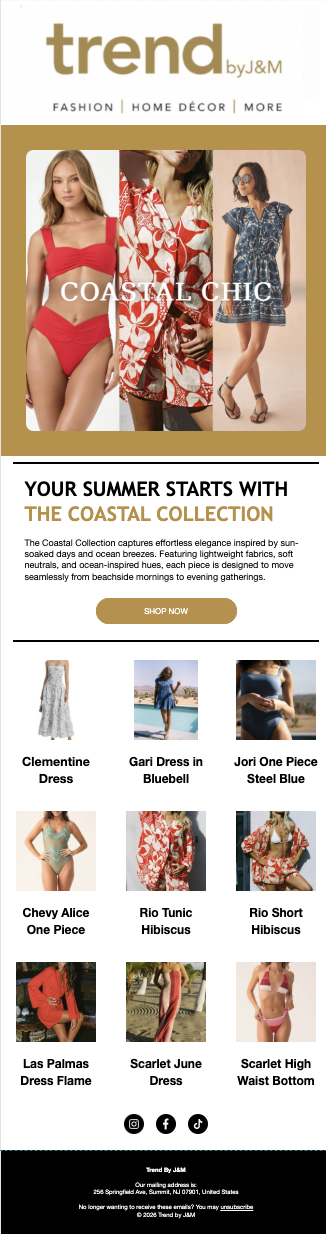
Vendor-provided model imagery
Version B
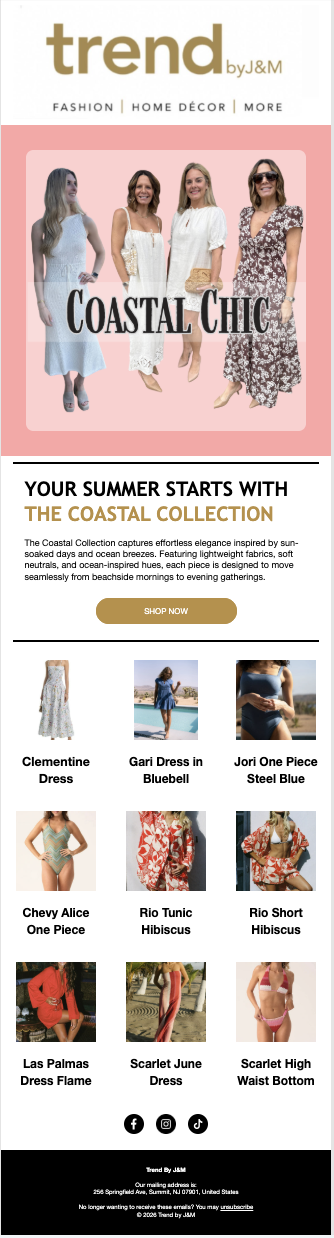
Real people styled by the boutique
Controlled Elements
Same subject line
Same product selection
Same layout and Call To Action
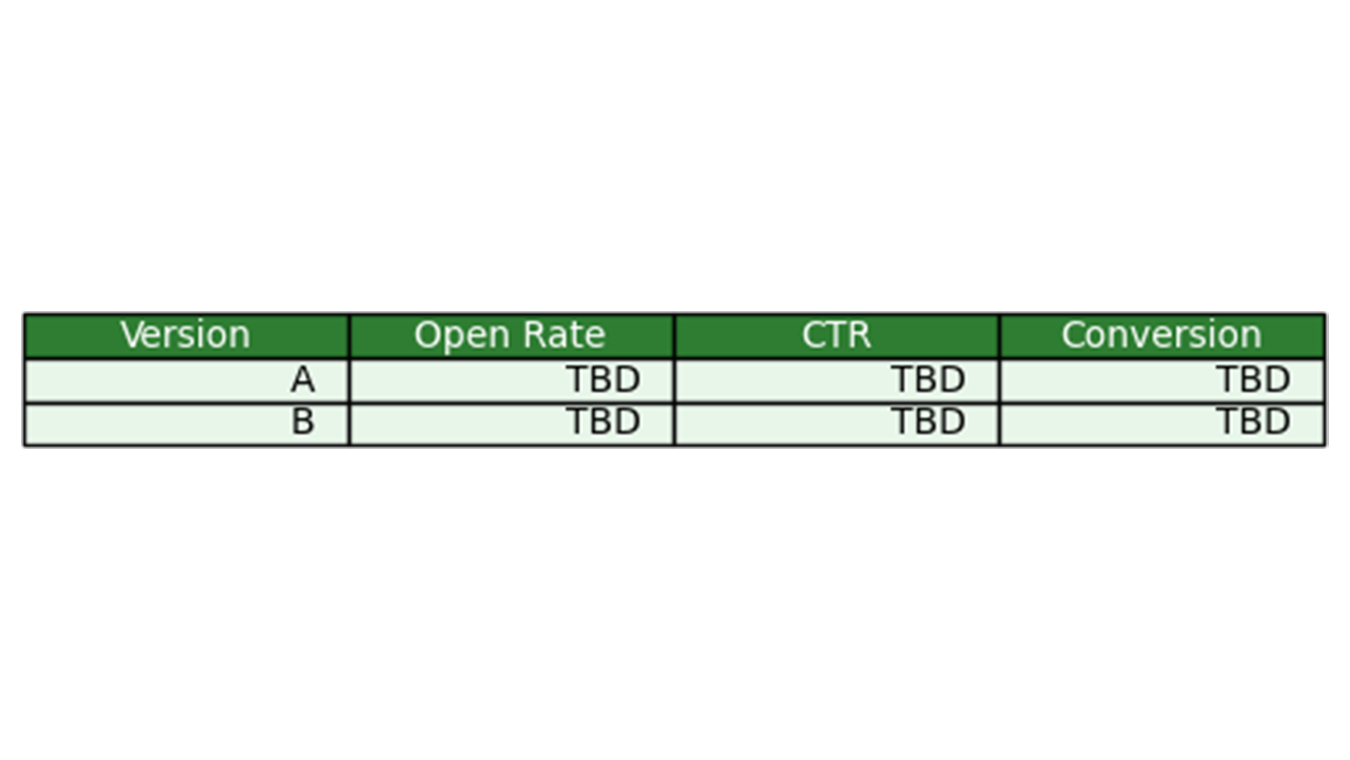
Metrics Tracked
Open rate
Click-through rate
Conversion rate
The Approach
A/B Test Breakdown
Version A — Vendor Imagery
Professionally shot model photos
Clean, polished aesthetic
Consistent brand presentation
Version B — Boutique Imagery
Real people wearing the products
More authentic and relatable styling
Reflects in-store experience
Hypothesis
Boutique imagery will drive higher engagement because it feels more authentic and relatable to customers.
Performance differences will indicate whether authenticity or polish is more effective in this context.
Results Framework
Reflection & Takeaways
*
Reflection & Takeaways *
This project reinforced how impactful a single visual change can be in email marketing. By isolating the featured image as the sole variable, it became clear how different imagery styles can shape customer perception and behavior. Vendor-provided photos offer a polished and consistent look, but they can feel less personal. In contrast, images featuring real people styled by the boutique introduce a sense of authenticity that may better connect with customers and reflect the in-store experience. This highlighted the importance of aligning visual content with how a brand wants to be perceived, not just how it wants to look.
From a process standpoint, this project emphasized the value of structured testing over assumption-based decisions. Rather than relying on preference or aesthetics alone, A/B testing provides a clear framework for evaluating what actually drives engagement. It also showed that even small creative decisions, like the choice of imagery, can have measurable effects on performance. Moving forward, I would expand this approach by testing additional variables, such as subject lines or layout changes, and incorporating real campaign data to further validate insights and guide future marketing strategy
Notable Skills & Tools
Structured a controlled A/B test by isolating a single variable, the featured image, to accurately measure its impact on email performance and eliminate confounding factors.
A/B Testing & Experiment Design
Developed a targeted email campaign focused on promoting a seasonal collection, aligning messaging, layout, and product selection to reflect a cohesive boutique brand identity.
Email Marketing Strategy
Analyzed the impact of vendor-provided imagery versus authentic boutique photography to evaluate how different visual styles influence customer perception and engagement.
Visual Content Strategy
Designed high-fidelity email mockups in Canva, ensuring consistency in layout, hierarchy, and call-to-action placement across both test variations.
Campaign Design & Layout (Canva)
Defined key performance indicators, including open rate, click-through rate, and conversion rate, to evaluate campaign effectiveness and guide decision-making.
Performance Analysis & Metrics
Applied a structured testing approach to move beyond intuition and use measurable insights to inform marketing strategy and future campaign optimization.