

Preserving the Story of Salt: A Digital Collaboration with the Livingston County Historical Society
Transforming static exhibits into interactive digital experiences that educate and engage learners of all ages
About The Client
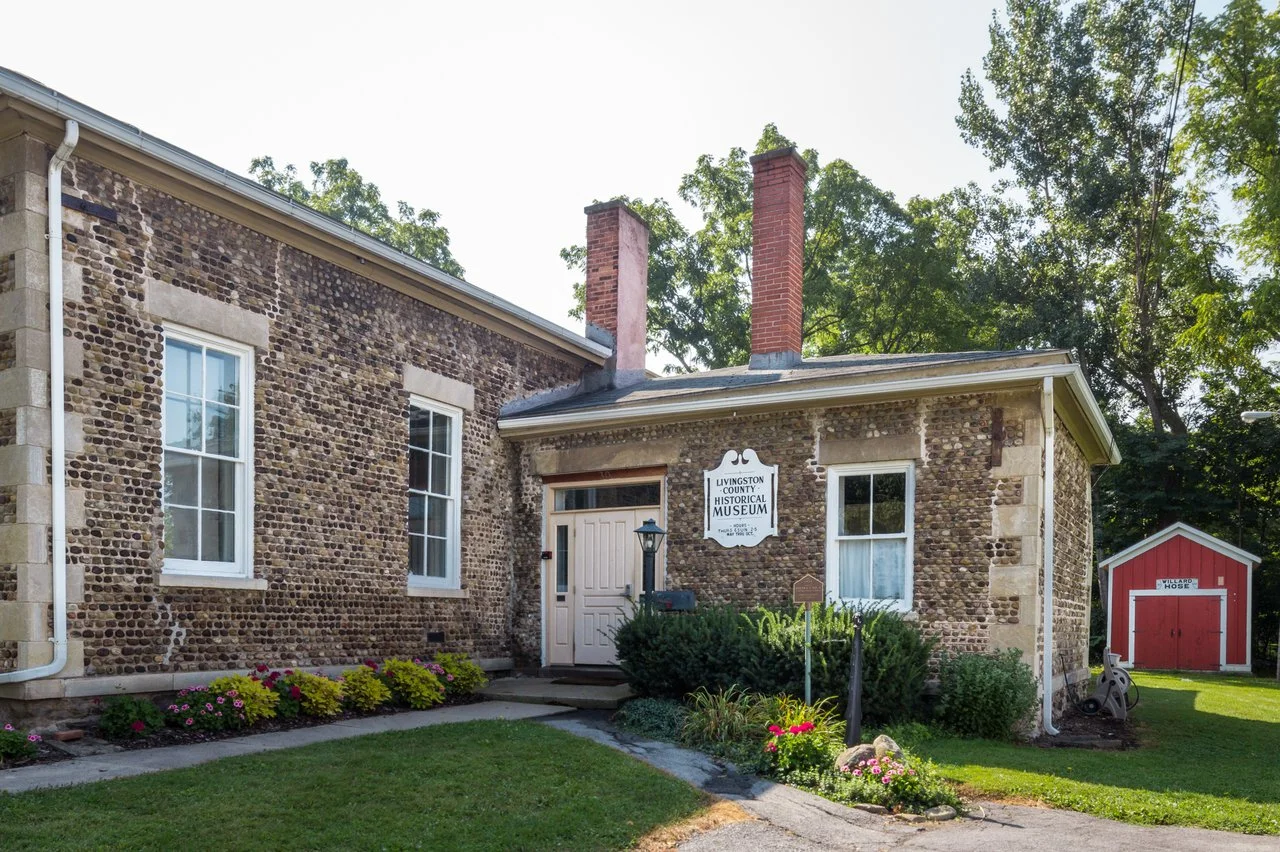
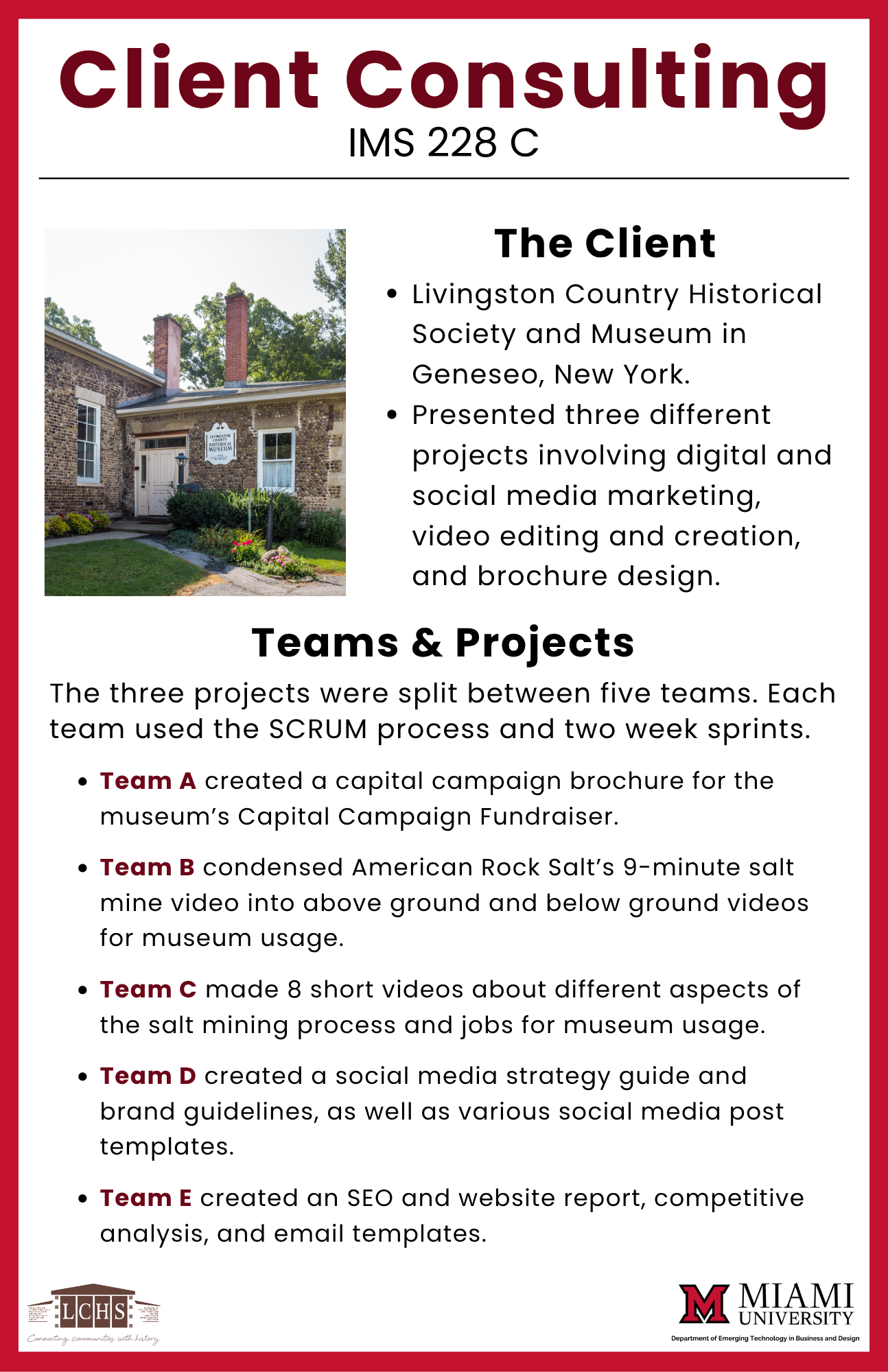
The Livingston County Historical Society Museum, located in Mount Morris, New York, is a non-profit museum dedicated to preserving the history of Livingston County. Staffed primarily by volunteers, with a small number of paid employees, the museum serves as a community hub for local heritage and storytelling. A key upcoming initiative is their expansion of a new exhibit focused on the American Rock Salt mine. For this project, the museum wanted engaging, educational media that could capture the attention of school-aged children and social media audiences alike.
They asked our team to develop short, informative videos to highlight jobs within the salt mine, suitable for both an in-person museum exhibit and digital platforms.
Our Team
I worked on a team of five students majoring in Emerging Technology in Business & Design at Miami University. Collectively, we brought a range of skills to the table: from video production and voiceover to user testing, graphic design, and storyboarding. I personally contributed by leading the storyboard creation and video editing for multiple mining roles, as well as performing voiceovers.
The Problem
(User-Centered Framing)
The museum identified a key challenge: younger visitors often lost interest in the exhibit’s written panels and static displays. They needed dynamic, visual content to hold the attention of 4th and 5th-grade students while explaining the complexity of underground mining work in a simple, digestible way.
We translated this into the following user story:
As a 4th or 5th-grade student visiting the exhibit or browsing social media, I want to understand what jobs in the salt mine are like so I can learn more about my local community in a fun and engaging way.
Design Process
We followed a sprint-based, iterative process to develop and refine our deliverables:
1. Research & Scoping
We reviewed educational content standards for elementary students and researched the structure and hazards of underground mining. We also learned about the real-life conditions of the American Rock Salt mine to ensure accuracy.
2. Storyboarding & Scripting
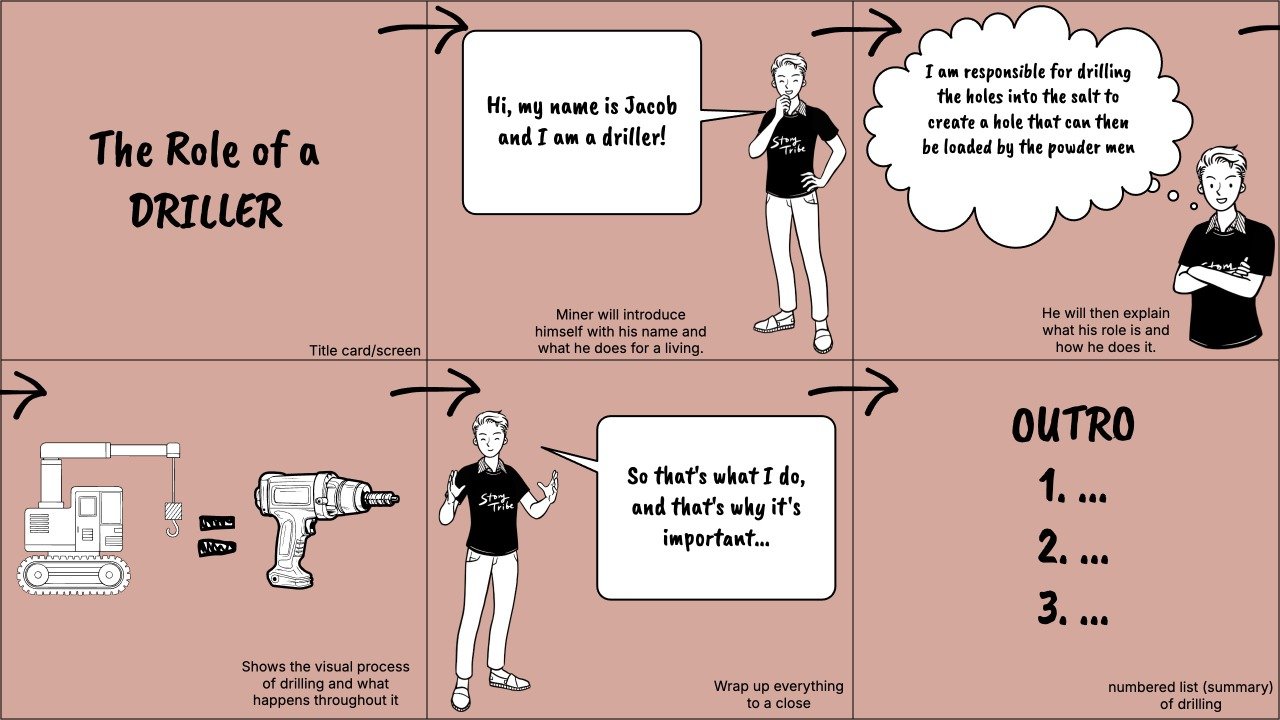
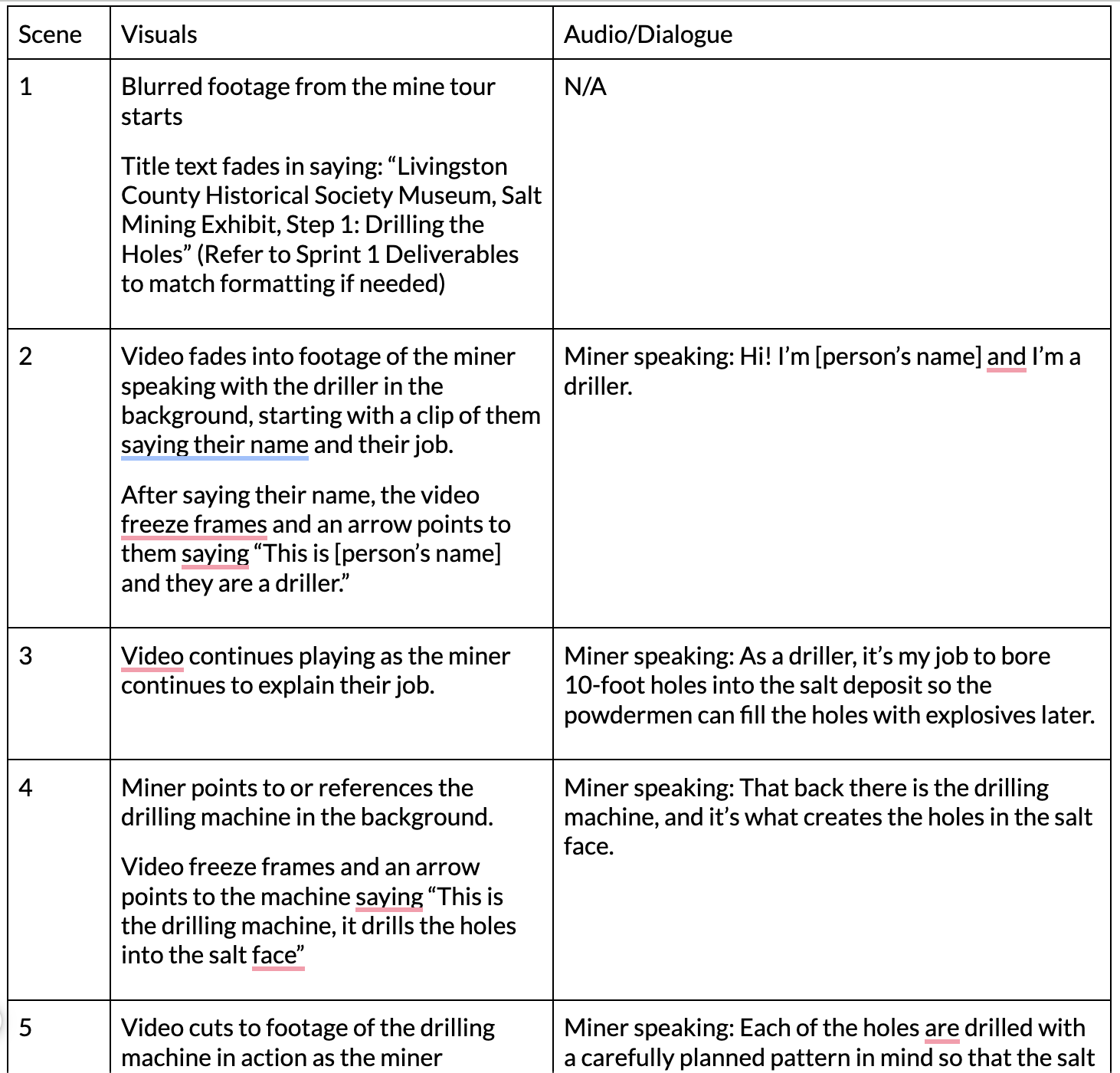
I created the storyboards for the Driller, Fueler, and Roof/Ground Control videos, mapping out visuals, narration, and key learning points.
3. Pain Points & Solutions
A major pain point was the inability to collect new footage from the mine due to access limitations. To solve this, we creatively repurposed existing video content and complemented it with engaging voiceovers and on-screen graphics. We also ran into time constraints when balancing multiple deliverables, but we mitigated this by dividing responsibilities based on individual strengths.
4. User Testing & Feedback
One teammate conducted testing sessions with her younger siblings (ages 9–11) to observe attention span and comprehension. Based on this, we shortened some voice-overs, added more subtitles, and increased visual pacing to keep viewers engaged.
Artifacts & Deliverables
*
Artifacts & Deliverables *
We created the following:
Personas & User Stories:
Defined our audience and framed our content creation accordingly.
Storyboards:
Visual blueprints for each video.
Scripts & Voiceovers:
I contributed narration for Driller and Roof/Ground Control videos.
Sprint Artifacts
Including our retrospective reflections and “Definition of Done” checklist.
Final Videos (x8):
Each is approximately one minute long, highlighting mining roles such as
Driller
Roof/Ground Control
Fueler
LHD Operator
Fire Safety
Mine Collapse Response
Powder Man
Surge Bin Operator
Final Logo Animation
A shared outro displaying partner logos.
Personal Contributions & Skills Learned
My primary responsibilities included:
Storyboarding three of the six final videos
Editing the Driller and Roof/Ground Control videos
Voiceover work for both
Coordinating visuals with existing footage limitations
From this project, I strengthened my skills in collaborative media production, client communication, and content design for young learners. I also gained practical experience with project management tools, working under tight deadlines while maintaining quality and clarity.
Final Thoughts
Working with the Livingston County Historical Society gave me real-world experience applying design thinking and communication in a client-centered environment. It also challenged me to create work that was not only visually appealing but accessible, educational, and impactful for both in-person and digital audiences.
This project has become one of the most meaningful in my portfolio, not just because of the content, but because of the story it helps tell.